
Steam Irons in Oman: Soleplates, Steam Output and Water Care
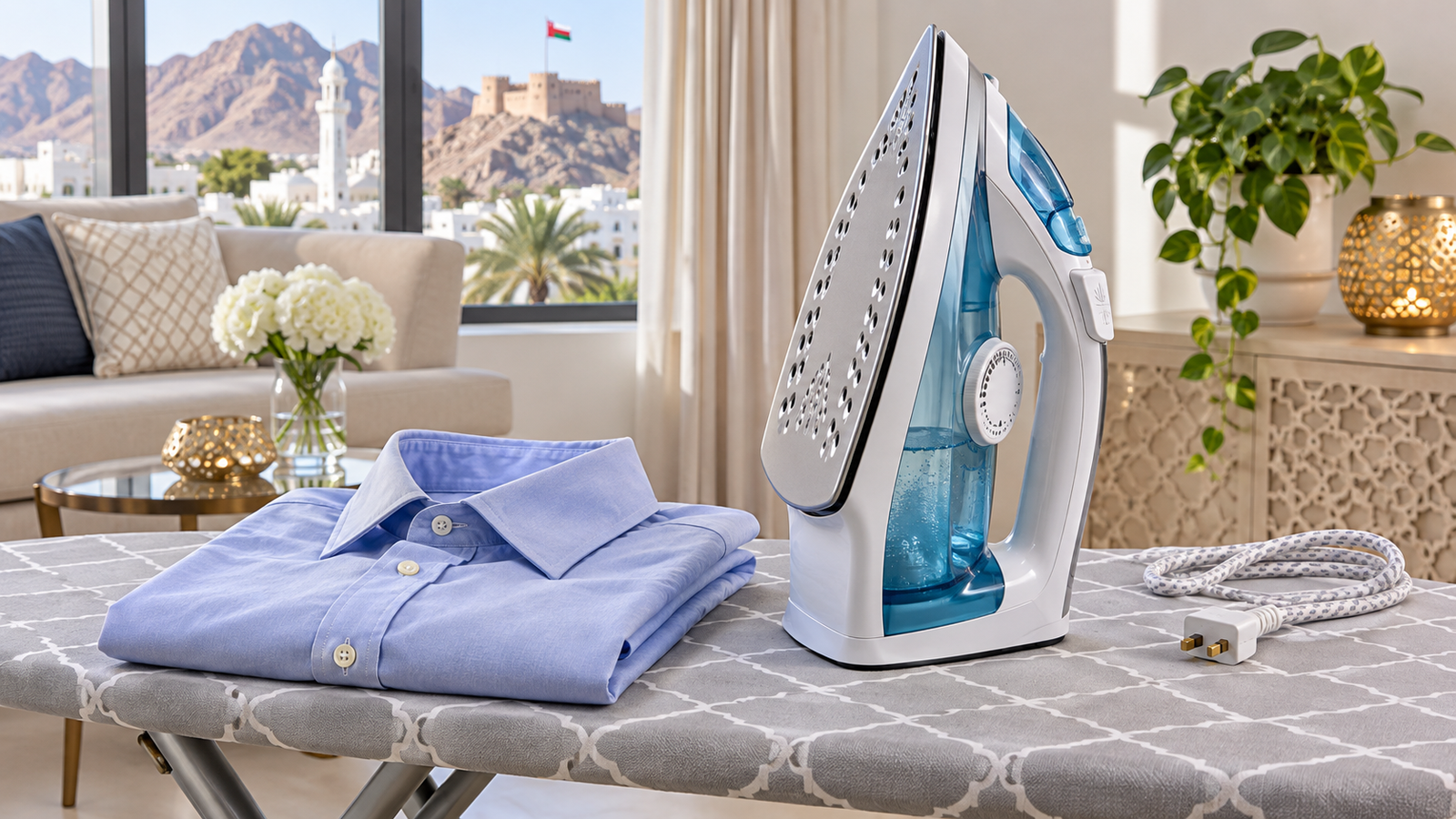
A steam iron is a small purchase that can change a weekly chore. The useful question is not simply how many watts appear on the box. In Oman, compare the iron against the clothes you actually press, the number of items in a session, and the care you are willing to give its water system. A smooth soleplate, usable controls and a tank you can fill without spilling may matter more in daily use than a dramatic steam-boost figure.
Begin with the clothes and the ironing surface
List the fabrics you iron most often: cotton shirts, school uniforms, abayas, linen or synthetic blends. Read garment care labels before choosing heat. A conventional steam iron presses fabric against an ironing board, so it can create crisp seams and collars. If you mainly want to freshen hanging clothes, see our garment steamer guide; the two appliances solve different tasks. Check that your board is stable and that its cover gives the iron a flat path. An excellent iron cannot compensate for a wobbly board.
Judge the soleplate in your hand
The soleplate is the part that touches fabric. Compare its shape at the tip for reaching between buttons and around collars, the distribution of steam holes, and how easily it moves across a sample garment if a shop demonstration is possible. Retailers may describe ceramic or coated metal surfaces, but a material name alone does not prove that one model will glide better for your laundry. Inspect the plate for a smooth finish and ask how the maker says to clean it. A comfortable handle and cord that can follow your usual ironing direction also deserve attention. Lift the iron with a partly filled tank if possible: a weight that feels reassuring for one shirt may become tiring over a full basket.
Read continuous steam and boost separately
Continuous steam is what the iron delivers while you work; a steam boost is a short burst for a stubborn crease. Compare both figures only when listings state the same units and conditions. A high electrical wattage is not itself a measure of steam delivered. Look for a steam selector you can adjust without losing your grip, a clear temperature setting, and a dry-ironing option for garments whose care labels do not allow steam. The Philips user manual we checked warns that steam at a low temperature can cause water to leak. Let the iron reach its selected temperature and follow the instructions for that model rather than assuming every fabric can take a burst.
Plan for filling, scale and storage
Tank capacity affects how often you refill, but a larger full tank adds weight. Check whether the fill opening is easy to reach, the maximum line is visible, and the iron can stand securely on its heel. Anti-drip and automatic shut-off are useful features to look for, but confirm them on the exact model, not just the series name. Water guidance also varies: one Philips manual permits tap water and suggests a distilled-water mix where water is very hard, while another recommends distilled or demineralized water in hard-water areas. Use your own model’s manual. Do not pour perfume, vinegar or descaling chemicals into the tank unless its instructions expressly allow them. After a session, let the iron cool, empty it if instructed, and store it upright with the cord loosely secured. Follow the model’s calc-clean or scale-collection routine rather than improvising a treatment.
Compare a shortlist before paying
LuLu Oman’s iron category illustrates the range: basic dry irons sit alongside steam irons with different wattages, tank sizes and soleplate descriptions. Use the listing to identify models, then check the current product page or box for the exact specifications, warranty provider and included manual. Stock and offers can change. In a store, compare two or three irons using the same questions: Will the plate reach the garment details? Can you read the controls? Can you fill and empty the tank neatly? Is the loaded weight comfortable? Are replacement or service details clear? Keep the receipt and model number for any warranty discussion.
A practical final check
Choose the simplest model that handles your regular fabrics and session length. If you iron only occasionally, prioritize easy filling and storage. If you press a large basket each week, pay closer attention to grip, continuous steam, tank handling and scale care. Before buying, shortlist two steam irons sold for Oman, compare their exact manuals and warranty terms, then choose the one you would be comfortable using and cleaning every week.
