
Dining Sideboards in Oman: Fit, Storage and Delivery Checks
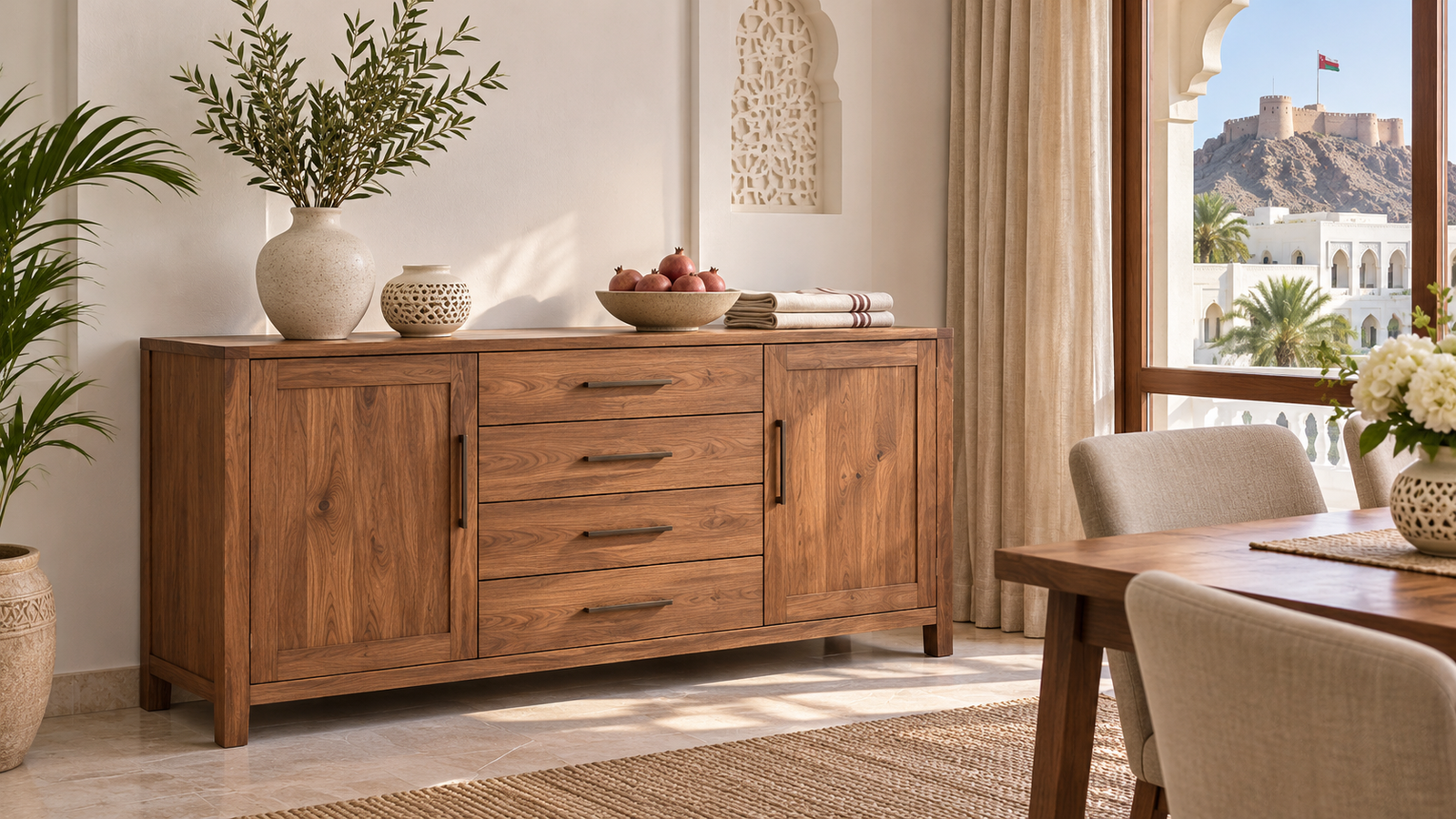
A dining sideboard can keep serving dishes close to the table while giving the room a calmer, less crowded look. Yet the most attractive cabinet in a listing may be awkward to use if its doors cannot open fully or its shelves will not hold your largest platters. When comparing dining sideboards in Oman, start with the objects you need to store, then measure the room and the delivery route before choosing a finish.
Decide what the cabinet must hold
Make a quick inventory: everyday plates, occasional dinnerware, table linens, trays, serving bowls and perhaps small appliances used only when guests arrive. Measure the widest platter and tallest item rather than counting pieces alone. A long, shallow cabinet can suit folded linens and plates but may disappoint if deep bowls or bulky equipment are the priority. Check usable internal shelf dimensions, not just the overall product size. Adjustable shelves can help, but verify the adjustment positions and the weight guidance on the individual product page.
Choose closed doors when you want to hide mixed packaging or protect less frequently used pieces from dust. Open shelves or glass fronts make a display easier but ask for more regular tidying and cleaning. Drawers are useful for cutlery, napkins and small accessories; check their internal depth and whether they open far enough to reach items at the back. If children use the room, think about access to fragile items and follow the manufacturer’s instructions for securing furniture where required.
Measure the room with the doors open
Door swing and walking clearance
Record the wall width, available depth and height beneath any artwork, mirror or window. Mark the cabinet footprint on the floor with removable tape. Then allow space for dining chairs to move and for people to pass when someone is seated. A product’s stated width and depth describe the closed cabinet; they do not tell you how much room a swinging door or extended drawer needs. Look at the door direction and measure that operating space too.
Check skirting boards, wall sockets and uneven floor surfaces. These can stop a cabinet sitting where a floor plan suggests it should. If you intend to place a lamp or serving setup on top, confirm the top’s usable area, stated load guidance and distance from nearby sockets. Avoid routing cords through a door gap or placing a hot appliance on a surface unless the product instructions permit it. A lower sideboard can leave wall space for art; a taller hutch can add storage but may feel intrusive beside a compact dining table.
Match the sideboard to the table and daily routine
The cabinet does not need to match the table exactly. Compare proportions first: a long sideboard against a small table can dominate the room, while a very narrow unit may offer little practical storage. Consider where people stand when serving food and whether the cabinet will block a chair, doorway or route to the kitchen. If your dining table is still undecided, our dining tables guide for Oman helps you work out seating and circulation before fixing a cabinet location.
Think about cleaning as well as appearance. Handles and textured fronts can collect marks; glass needs frequent wiping; an open base gives a mop more room but can reveal clutter beneath. Check the listed materials and care instructions for each candidate. A wood-effect surface, veneer and solid wood are different constructions, so avoid judging durability from a photograph or a colour name. If you store special-occasion tableware, the OmanHub dinnerware guide can help you list the shapes and pieces the cabinet must accommodate.
Compare Oman listings and delivery terms
IKEA Oman’s sideboards and buffets category includes cabinets with different stated widths, depths and heights, such as BOASTAD and HAUGA. Home Centre Oman’s buffet and hutch category gives another starting point for comparing low storage with taller display furniture. Use the categories to build a shortlist, then inspect each individual listing. Dimensions, materials, shelf layouts, delivery options and availability can differ between models and change over time.
Before checkout, confirm whether the cabinet arrives flat-packed or assembled, what assembly service costs if offered, and whether delivery reaches your address. Measure lifts, stair turns, corridors and the entrance to the dining room against the package dimensions, which may differ from the finished cabinet. Ask how returns work for large furniture, especially if access or fit is uncertain. Calculate the delivered and assembled total rather than comparing the item price alone. Do not assume the cabinet includes wall-fixing hardware or that a promotional delivery message applies to your address.
A practical shortlist before buying
Compare two or three models in one note: external dimensions; door and drawer clearance; internal shelf size; stated load limits; material and care; assembly requirements; package size; and the total delivered cost. Revisit the product page at checkout for current details. If one dimension is missing, ask the retailer before ordering rather than guessing from photographs.
Ready to choose? Measure your wall, walking space and largest serving dish, then compare two Oman sideboard listings for usable storage, door clearance and the delivered, assembled total.
