
Cookware in Oman: Choose Pans That Match Your Hob and Meals
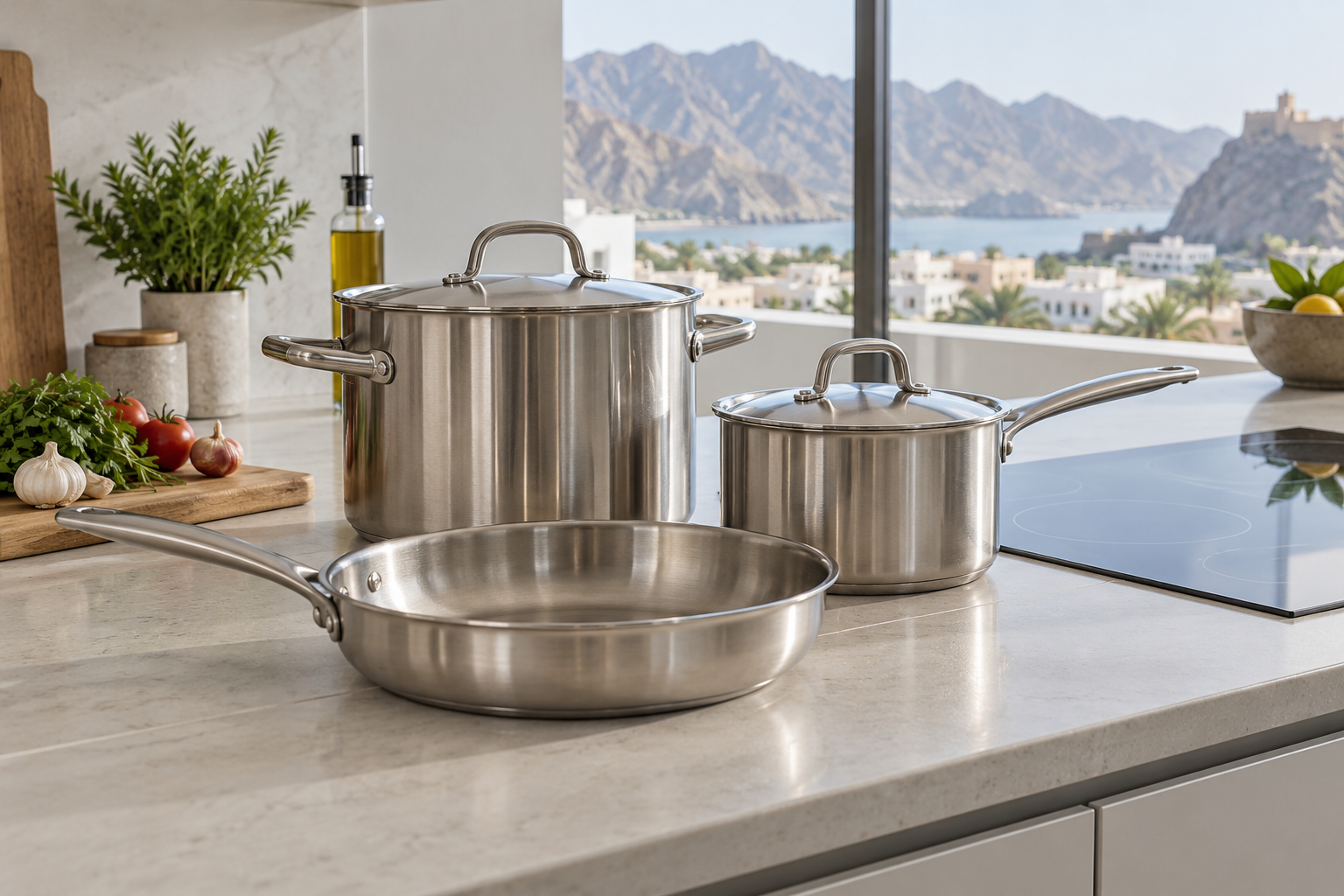
The most useful cookware in Oman is the cookware you will actually reach for. A large matching set can leave you with several lids and small pots while the pan you need for a family meal is still missing. Start with your hob, your usual dishes and your storage space, then decide whether a set or a few individual pieces make more sense.
Check the hob before the material
Read the compatibility information for each piece. A stainless-steel appearance does not, by itself, tell you whether a pan works on induction. For an induction kitchen, use the manufacturer’s explicit compatibility statement. For other hob types, check the same product information rather than assuming every base is suitable.
Look at the cooking surface as well as the outside diameter. A wide pan with steep sides may give you less flat space than expected, while long handles can crowd a small hob. Check that the pan sits securely and leaves room for another vessel alongside it.
Build around the meals you cook
Think through an ordinary week. Rice, a sauce, a quick egg breakfast and a larger stew place different demands on a pan. Write down which jobs your current cookware does poorly. That makes it easier to buy one useful replacement instead of paying for a complete collection you do not need.
Count usable pieces, not the number on the box
Set counts may include lids. Read the contents list and compare capacities, pan diameters and the number of actual cooking vessels. Check whether your largest portion fits comfortably and whether the smallest saucepan is useful for your routine. Lift the bigger pot with its lid on; weight and handle space matter when carrying a full vessel.
Match the finish to the care you can give it
Choose a surface you are willing to maintain according to its instructions. For example, IKEA Oman’s HEMKOMST set has different washing instructions for the pots and the frying pan. The product page also lists hob compatibility. This is a reason to inspect care information piece by piece rather than treating a set as one uniform product.
Ask which utensils and heat settings the manufacturer permits, and whether oven use includes the lid and handles. Do not read an oven-safe label as permission for every cooking method or temperature. If you regularly use a dishwasher, confirm the instruction for every item you expect to put in it.
Compare a set with a smaller shopping basket
Put the set beside a basket containing only the pot, saucepan and frying pan you need. Compare the final amount payable, useful capacities and replacement options. A set can be convenient when starting a household; individual pieces can be more sensible when most of your existing cookware is still working well.
Inspect lids, handles and bases in store where possible. Ask how a defect claim is handled and retain the item reference on the receipt. Treat branch stock, delivery and return terms as things to confirm for your purchase, not promises implied by a category listing.
Keep cookware separate from a kitchen project
If you are changing the layout, hob or cabinetry, settle those decisions before buying pans around an assumed cooking area. OmanHub’s kitchen planning guide covers that larger project. If a new appliance is part of the purchase, the appliance delivery checklist covers the separate handover questions.
