
Digital Kitchen Scales in Oman: Capacity, Tare and Cleaning
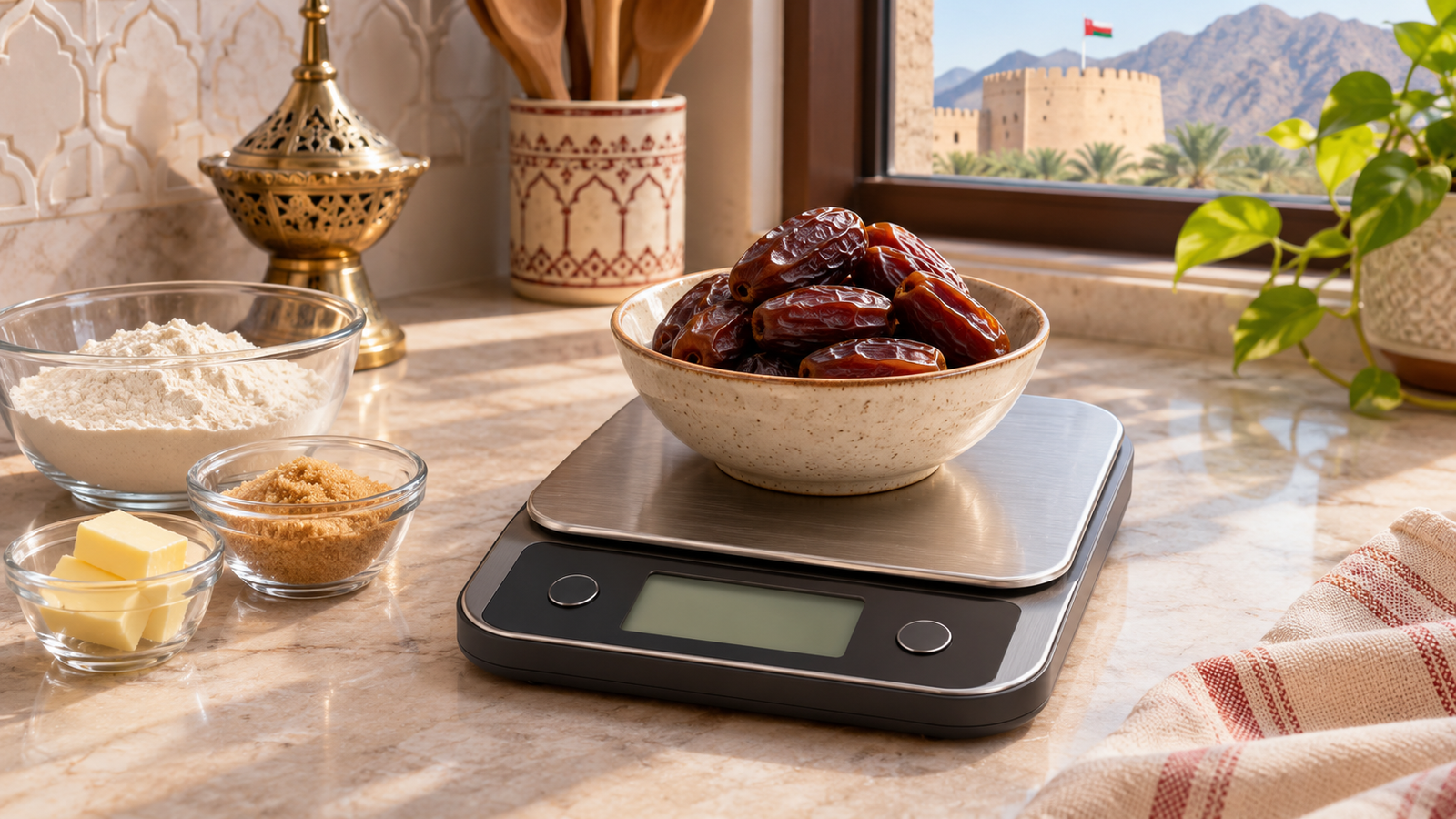
A digital kitchen scale earns its space when you need repeatable amounts for baking, portioning ingredients or dividing a batch across containers. The decision is more practical than choosing the largest capacity printed on a box. In Oman, compare how the scale handles your usual mixing bowl, the smallest amount you regularly measure, and the cleaning it will need after a busy cooking session. A model that is easy to read and reset can be more useful than one with a long list of units you never use.
Match capacity to the bowl and ingredients
Start with your heaviest ordinary task. Put your mixing bowl on a household scale if you have one, then add the expected weight of the ingredients. The maximum capacity of a kitchen scale includes the bowl, not just the flour or fruit inside it. Leave a margin rather than planning to weigh right at the limit. A compact scale may suit small recipes and coffee preparation; a larger platform may be easier for a broad bowl or a meal-prep container. Check the dimensions of the weighing platform and the space available on your counter and in your drawer. Capacity and physical fit are separate questions.
Do not confuse a kitchen scale with a bathroom scale when browsing a general weighing-scales category. LuLu Oman’s category includes both types, including digital kitchen-scale listings from Ikon and Beurer. Use the product name and exact model number to make sure the item you compare is designed for ingredients. The category is a useful starting point, but the individual listing or package is where to confirm specifications and current availability.
Look closely at increments and units
A scale’s display increment tells you the smallest change it shows, such as one gram. That is different from a promise that every reading is accurate to one gram. Check the stated increments and any accuracy information for the exact model. For everyday baking, a clear gram display is often the first requirement. If you routinely weigh very small quantities, such as a pinch of spice or a tiny amount of yeast, check whether the chosen scale is actually specified to handle that range; a standard kitchen scale may not register it reliably. The ability to switch between grams and other units is convenient only if the conversion and symbols are easy to understand. For recipes with liquid measures, do not assume a millilitre mode measures every liquid’s volume precisely: many scales calculate it from an assumed density. Weigh in grams when the recipe provides a weight.
Test the tare button with a real bowl
Tare, sometimes labelled zero, subtracts the weight of the bowl or current contents from the reading. Try the sequence you will use at home: place an empty bowl on the platform, press tare, add the first ingredient, press tare again, then add the next. The display should stay visible throughout. A large bowl can obscure a low-mounted screen or make a touch button awkward to reach. Check whether the controls respond when your hands are lightly floury or damp, and whether the scale gives you enough time to read a number before it switches off. Automatic shut-off conserves batteries, but a very short interval can interrupt slow measuring. Check the listed interval if that matters to your cooking routine.
Choose a surface you can keep clean
Flour, oil and splashes collect around seams and buttons. Inspect the platform edges and the join between the weighing surface and the body. A flat surface may be easier to wipe, while raised details can need more attention. Read the manufacturer’s cleaning instructions before putting any part under running water: a wipe-clean surface does not mean the complete scale is waterproof. Check the battery compartment for a secure cover, find out which battery the model uses, and consider where you will store a spare. Place the scale on a firm, level counter away from a hot hob, and let a washed bowl dry before setting it on the electronics.
If you prepare vegetables before weighing, our chopping-board guide covers the work surface. For dividing measured ingredients or finished portions, see the food-storage container guide. Those choices can affect which bowl or box you will actually place on the scale.
Make a fair comparison before paying
Shortlist two models sold for the Oman market and write down five facts for each: maximum capacity, display increment, platform dimensions, tare operation and cleaning instructions. Add battery type, unit options and warranty details if they affect your decision. Compare the exact model numbers rather than relying on a brand name or a photograph. If shopping in person, set your usual bowl on a display model where permitted and check screen visibility from your normal standing position. If ordering online, read dimensions and return terms before checkout. Prices, stock and offers may change, so confirm them at the point of purchase.
Your final check
As an example of model-specific specifications, Beurer’s official KS 19 Fresh product page lists capacity, graduation, tare and unit options separately. Check the exact model before ordering.
Choose the scale that accommodates your normal bowl and ingredient load, shows useful increments clearly, and makes repeated taring simple. Before you buy, compare two exact kitchen-scale models in Oman against one recipe you cook often; check the bowl fit, readable display, cleaning directions and current seller terms, then choose the one that suits that routine.
