
Dining Chairs in Oman: Match Seat, Table and Room
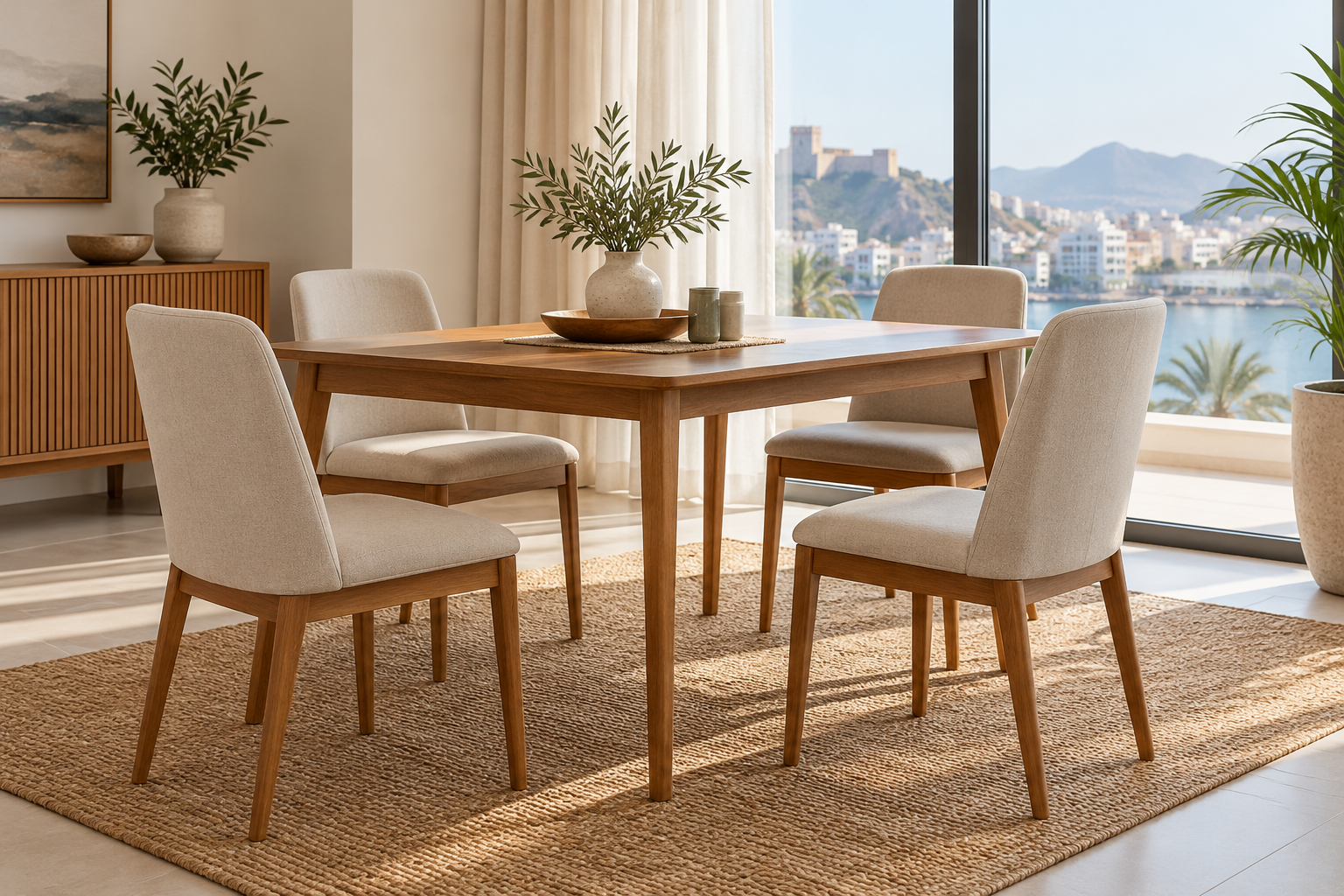
Dining chairs are used while people talk, eat and get up repeatedly; a chair that only looks good pushed under the table may be uncomfortable in daily use. When comparing dining chairs in Oman, bring your table measurements and look at each chair as an individual seat. The right number of chairs is the number that can be used without trapping a neighbour or blocking the room’s route.
Match the seat to your table
Measure from the floor to the underside of your tabletop or apron, not just to its upper surface. Compare that with the chair’s seat height and, if it has arms, the armrest height. The chair must slide into a useful position without its arms striking the table. A seat cushion can change sitting height after use, so try the exact chair where possible. Check whether the backrest fits under any low shelf or window ledge when the chair is pulled away.
Count width, not labels
Measure the widest part of the chair, including arms or an angled back, and the space between table legs. Place temporary markers for every proposed seat. Pull one chair out as a person would before standing, then see whether someone can pass behind it and whether nearby doors or drawers still open. A quoted seating capacity for the table does not guarantee that wider chairs will fit. Our dining-table guide covers the table’s footprint and extension if you are choosing both pieces.
Test comfort over a normal meal
Look at seat depth and whether your feet can rest comfortably on the floor when seated. Check how the front edge supports your legs and whether the backrest meets your back where you expect. If several people use the chairs, ask them to try the same model; one person’s ideal shape may not suit another. A heavier chair may feel stable but be awkward to move for cleaning, while a lighter one may be easier to handle. Check the maker’s stated use and weight limits for the specific chair rather than assuming all chairs in a range are identical.
Choose a surface you will maintain
Upholstery can soften a seat, but spills and crumbs make fabric and seams part of the buying decision. Check the care label, whether a cover is removable and how replacement covers are identified. For wood, metal or moulded seats, examine the finish, joints and cleaning instructions. Look underneath for feet or glides suitable for your floor, and find out whether they can be replaced. If chairs arrive flat-packed, check the assembly steps and whether fasteners need periodic checks according to the manufacturer.
Compare individual models
IKEA Oman’s dining-chair category shows different materials and profiles. Danube Home Oman’s seating range gives another comparison point, but confirm that the listing is for an individual chair rather than a set. Record seat height, overall width, arm height, care method and package dimensions for each candidate. Those figures make a showroom impression useful when you get home.
Next step: Measure your table height and the space behind each seat, then compare chair dimensions and care instructions.
