
Kitchen Knives in Oman: Blade Types, Grip and Care
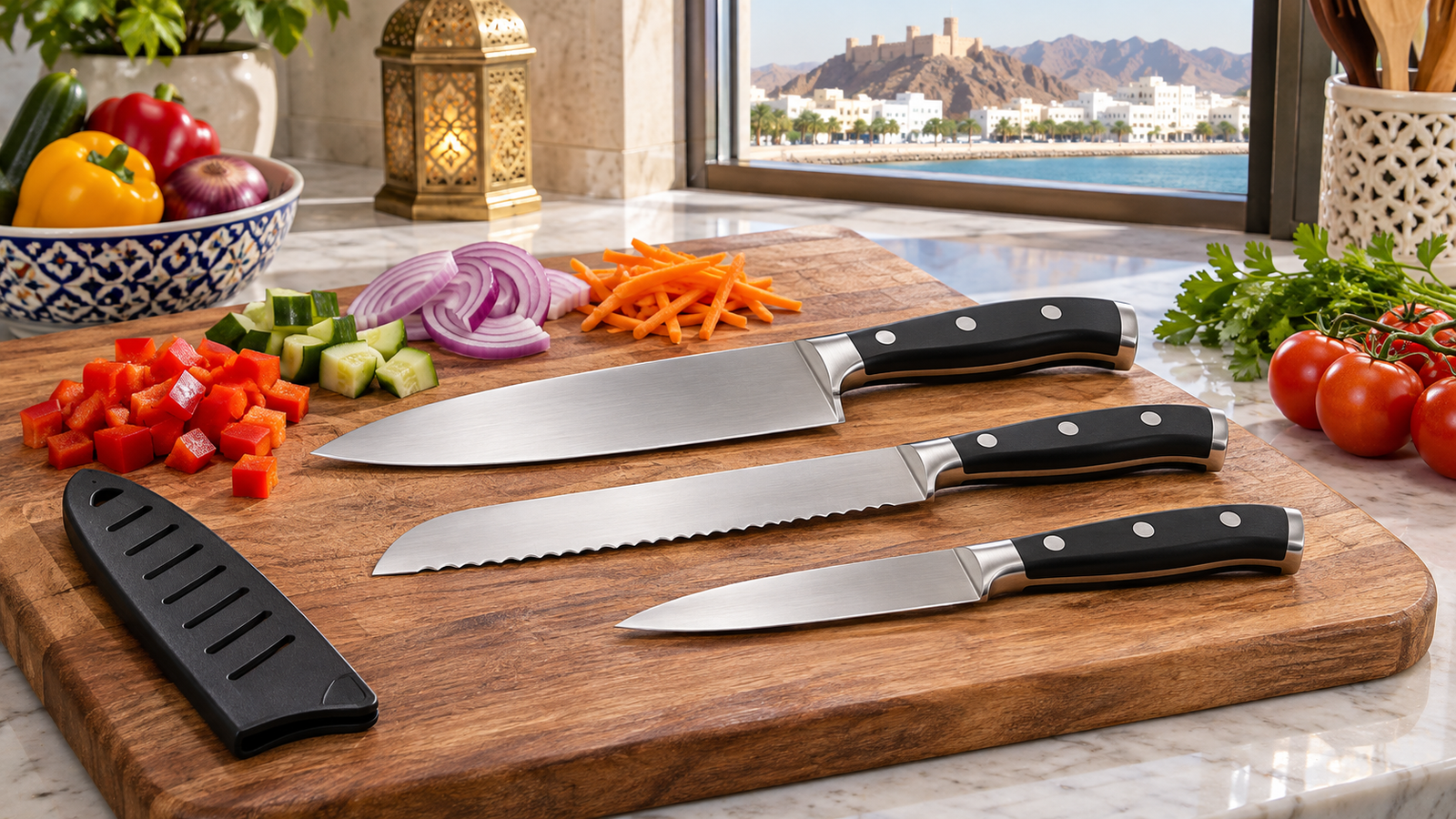
A kitchen knife earns its place by making your usual prep comfortable and controlled. Before buying kitchen knives in Oman, think about what you cut most often, how much room you have on the board, and whether you want one versatile blade or several specialist tools. A long list of knives in a set does not automatically make it the better purchase.
Start with the jobs you actually do
A cook’s knife for everyday prep
A cook’s knife is the most useful starting point for many home kitchens. Its broad blade handles chopping herbs, slicing vegetables and cutting larger ingredients. Blade length matters: a longer edge can cover more food in each stroke, but it also needs a larger board and more clearance. IKEA Oman’s knife category shows cook’s knives alongside shorter vegetable and paring knives. Treat the listed lengths as a fit comparison, then check the exact product specifications before ordering.
Small blades for close work
A paring knife suits peeling, trimming and small, precise cuts. A utility knife sits between a paring knife and a full cook’s knife and can be convenient for sandwiches, fruit and smaller vegetables. If you regularly prepare bread, a serrated bread knife does a different job from a plain edge. A meat knife can be useful for frequent meat preparation, but a category label alone does not tell you whether its shape suits your technique. Choose the task first and the blade second.
Compare the handle and blade in person where possible
A handle should feel secure without forcing your wrist into an awkward angle. Check whether your fingers have enough space below the handle when the edge rests on a board. A very heavy knife may feel stable for one person and tiring for another; a light knife may be easier to manoeuvre but less comfortable for long chopping sessions. If shopping online, look for the knife’s overall length, blade length, weight and handle material. Product photographs help, but they cannot confirm how a grip feels in your hand.
Stainless steel is common in everyday ranges, while some sets use ceramic blades. Neither label alone tells you how the edge will perform over time. Read the maker’s care instructions, especially before using a dishwasher or a sharpening tool. Look at how the handle joins the blade, whether cleaning around that join will be easy, and whether the knife comes with a safe cover or storage option.
One knife, a pair or a set?
For a first kitchen, a comfortable cook’s knife plus a small paring knife may cover more daily work than a larger set with blades you rarely use. A set can make sense if you need several blade types and have space to store them safely. Compare what is actually included: a block, covers and sharpening accessory may be separate items. IKEA Oman lists individual knives and sets; LuLu Oman’s knife category is another place to compare the types offered. Home Centre Oman’s kitchen tools also includes knife sets. Range pages can change, so confirm the chosen model, delivery area and final price at checkout.
Match the knife to the board
A sharp blade still needs a stable work surface. Check that your board is wide enough for the food and the length of your cutting stroke, and put it on a level, non-slip surface. Our guide to chopping boards in Oman helps with size, material and cleaning choices. If storage is tight, plan where every blade will live before buying a multi-piece set; loose knives in a drawer are difficult to find and expose hands to the edges.
Care that keeps the purchase useful
Follow each manufacturer’s washing instructions. As a practical default, wash the knife promptly after use, keep fingers clear of the edge, dry the handle and blade thoroughly, and store it where the edge is protected. Do not leave a knife hidden in a sink of soapy water. Use a board suited to cutting rather than a plate or countertop that can damage the edge. A honing tool and a sharpener serve different purposes: honing realigns an edge, while sharpening removes material to restore one. Check the maker’s guidance before using either, particularly on ceramic or specially coated blades.
For a shared household, decide who will have access to the storage location. A block, sheath or suitable rack may make the knives easier to account for, but installation and reach matter. In a larger kitchen project, consider knife storage as part of your kitchen layout and installation plan, not an afterthought.
A simple buying checklist
Write down your three most frequent cutting tasks. Pick a blade type for each, then compare actual blade length, handle fit, cleaning requirements and protected storage. If you are buying for a restaurant or a high-volume kitchen, the durability and workflow questions differ; our commercial kitchen equipment guide is a better starting point for that purchase. For home use, keep the decision anchored to the knife you will reach for every day.
Compare kitchen knives at Oman retailers, check the exact blade and handle details, and confirm delivery and final cost before you buy.
