
Shoe Storage in Oman: Cabinets and Racks for Narrow Entrances
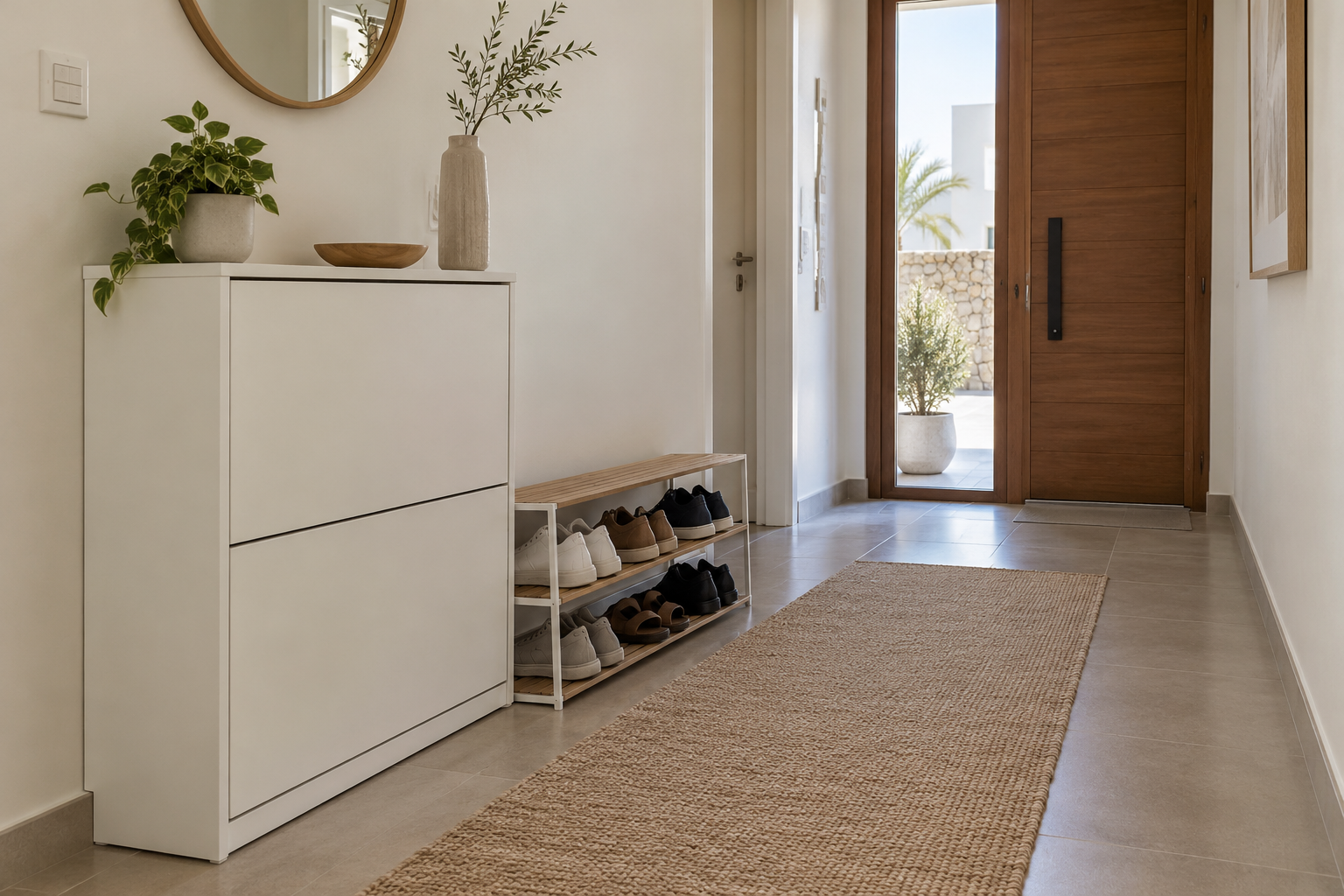
Shoe storage in Oman is often a small purchase with a large effect on the entrance. The right unit gives everyday footwear a place without making the doorway awkward. Before choosing a cabinet or rack, count the pairs that actually live near the door and measure the space people use to enter, turn and put down their bags.
Measure more than the wall
Record the available width, depth and height. Then open the entrance door fully and check nearby cupboards, switches and sockets. A cabinet can fit against the wall yet block the route when its compartments open. Mark both the closed footprint and the opening area on the floor before placing an order.
Look at skirting boards and anything projecting from the wall. They may affect how a unit sits or how it must be fixed. Check the assembly instructions for the exact model before deciding that its feet or rear profile will accommodate your room. If fixing is required, establish that the location and wall are suitable.
Compare open racks and enclosed cabinets
An open rack gives quick access and makes it easy to see which pair is missing. It also leaves the shoes visible, so consider whether that suits the entrance. Measure the usable shelf depth, especially for larger trainers, and look at the spacing between tiers for ankle boots or taller footwear.
A closed cabinet keeps the view tidier, but the internal mechanism matters. Tilt-front compartments need space to open and can accommodate footwear differently from ordinary horizontal shelves. Try your largest regularly used pair where a display is available. Do not judge capacity from a photograph containing only small shoes.
Treat pair counts as a starting point
The GULLABERG four-compartment cabinet on IKEA Oman is listed at 105 by 22 by 107 cm with a nominal capacity of eight pairs. It illustrates how shallow storage can use wall width and height. Your footwear still needs its own fit check; a capacity label is not a promise for every shoe size and shape.
Count everyday pairs separately from occasional shoes. You may need easy access for only a few pairs, with the remainder stored elsewhere. Leaving some spare room is more useful than filling every compartment on the first day, especially in a shared entrance where people’s routines differ.
Check access at the height you will use
Open the lowest compartment and imagine taking out shoes while carrying a bag. Check whether the handle is easy to reach and whether a neighbouring door would strike it. A cabinet advertised with a useful top surface should not be treated as a seat unless the manufacturer specifically allows that use.
Plan cleaning and fixing
Examine how you would remove dust and grit from the shelves, corners and floor underneath. Check whether any inserts are removable and follow their care instructions. A finish that looks attractive in a display should also suit the way you maintain your entrance. Ask about replacement handles or hinges if the design depends on particular hardware.
The GULLABERG model described above must be anchored to the wall following IKEA’s instructions. Follow the manufacturer’s wall-fixing requirements and use fittings suitable for the wall. For help comparing that separate service, see OmanHub’s furniture assembly guide. Confirm what the purchase includes before delivery, including assembly arrangements and any required fixing components.
Build a shortlist around the entrance
Compare the IKEA cabinet example with an open option such as the two-tier rack listed by Centrepoint Oman. Home Centre’s Oman storefront also provides a shoe-storage category. These are starting points for exploring formats, not a ranking of tested products or a guarantee of availability.
Take a photograph of the entrance, the measurements and your largest pair’s dimensions when shopping. Compare the opening space, usable storage and complete delivered cost of two suitable units. Choose the one that lets the entrance work comfortably every day. Compare shoe storage using your entrance measurements and largest pair.
